
How do I know when my meat is done?
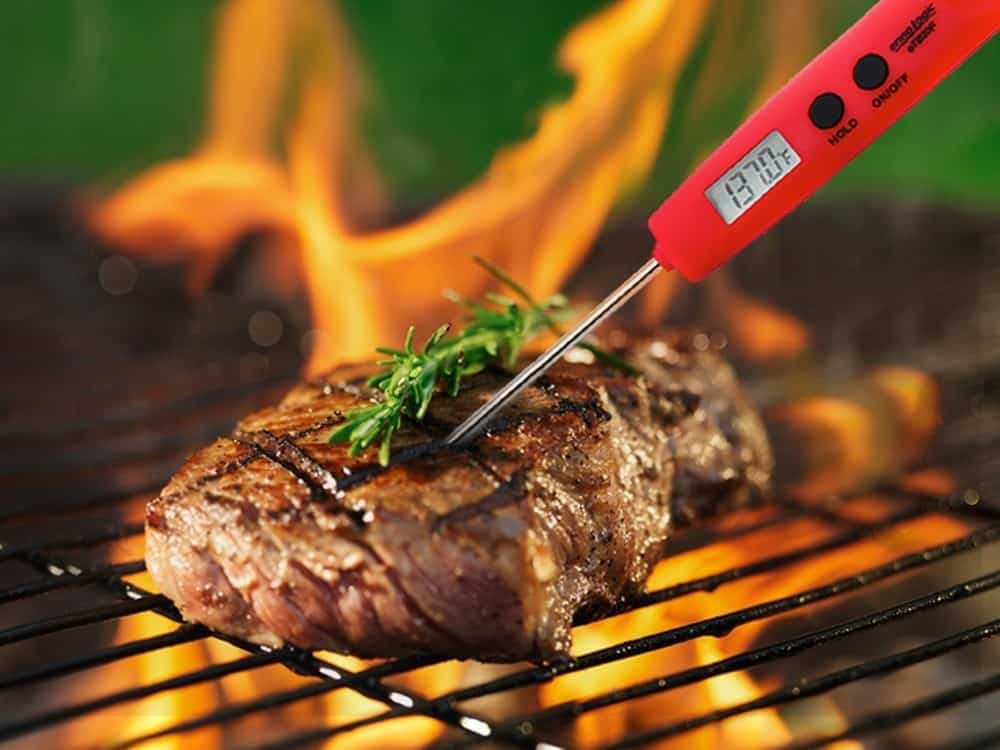
The only sure way to know if your meat is done is to measure the core temperature with a meat thermometer. Every type of meat and preparation has its own core temperature, from rare beef to well done chicken. Also let the meat rest after grilling, so the juices redistribute through the meat.
- Always use a meat thermometer, not your fingers or the clock
- Test your thermometer in boiling water: it should read 100 degrees
- Red meat can be rarer, poultry must always be fully cooked through
- Let meat rest for 5 to 30 minutes after grilling, depending on thickness
- Meat carries on cooking 2 to 7 degrees after grilling (carry-over cooking)
Your kamado bbq up to temperature, meat on it.. And now? Your lovely piece of steak won't turn itself over when the time is right, let alone call out; “Yo, I'm medium rare now!”. That's why we're giving you some handy tips and tricks to avoid that embarrassment. So you won't be laughed at by friends and family.
Forget the clock
You often see with recipes, 3 minutes on each side. But how? How does the recipe writer know how thick the meat is or what temperature the meat has when you put it on the bbq? So forget the clock. There is another trick; feeling with your fingers how soft the meat is. A star chef could pull off this trick just fine, but grill fanatics like you and me are better off playing it safe and using a meat thermometer.
Which meat thermometer?
Go digital or old-school analogue, both are fine thermometers, it's just what you want to spend and what demands you place on the convenience of bbqing, as long as they show the correct temperature. You can easily test this yourself, by the way. For those who had physics at school, you may remember that boiling water reaches a maximum of 100 degrees. So, if you hold your thermometer in that boiling water and it shows 100 degrees, you know you're good. Off by a bit? Then most thermometers can still be adjusted.
By the way, don't go using a regular household, garden, kitchen or ear thermometer belonging to your child or dog. That's not just a bit odd or even unhygienic, but these thermometers can never handle the high temperature of your kamado bbq.
When is your meat done?
That of course depends entirely on the type and weight of your meat. And of course your personal preference. Below we've listed various types of meat and the core temperatures that go with them. You'll see that red meat needs less heat and can therefore spend less time on the grill. Poultry like chicken can be a bit warmer, partly so you avoid nasty illnesses of course, so cook that chicken through properly!
Red meat category:
Beef, meat on the bone or a steak
- Rare: 50 to 52 degrees
- Medium rare: 55 to 58 degrees
- Medium: 60 to 63 degrees
- Medium Well: 65 to 67 degrees
- Well done: 70 to 80 degrees
Ground beef
- Medium Well: 65 to 67 degrees
- Well done: 70 to 80 degrees
Ground beef steak
- Medium rare: 55 to 58 degrees
- Medium: 60 to 63 degrees
- Medium Well: 65 to 67 degrees
- Well done: 70 to 80 degrees
Roast
- Rare: 50 to 52 degrees
- Medium rare: 55 to 58 degrees
- Medium: 60 to 63 degrees
- Medium Well: 65 to 67 degrees
- Well done: 70 to 80 degrees
Beef sausage
- Well done: 70 to 80 degrees
Lamb and goat
Lamb
- Rare: 50 to 55 degrees
- Medium rare: 55 to 60 degrees
- Medium: 60 to 63 degrees
- Medium Well: 65 to 67 degrees
- Well done: 70 to 80 degrees
Ground lamb
- Well done: 70 to 73 degrees
Goat
- Medium: 60 to 63 degrees
- Medium Well: 65 to 67 degrees
- Well done: 70 to 80 degrees
Ground goat
- Well done: 70 to 73 degrees
Poultry
Chicken and turkey fillet
- Well done: 70 to 72 degrees
Chicken and turkey thigh, leg and wings
- Well done: 85 degrees
Duck
- Medium: 65 degrees
- Medium Well: 70 to 75 degrees
- Well done: 79 to 82 degrees
Fish
Salmon
- Medium rare: 55 degrees
Cod
- Well done: 60 degrees
Tuna
- Medium rare: 52 degrees
Other white fish
- Well done: 64 degrees
Last but not least:
Pork
Pulled pork (pork shoulder)
- Well done: 89 degrees
Roast
- Medium: 62 degrees
- Well done: 70 to 90 degrees
Meat on the bone
- Medium: 62 degrees
- Well done: 70 to 90 degrees
Shoulder
- Well done: 70 to 90 degrees
Ribs (e.g. spare ribs)
- Well done: 70 to 90 degrees
Ground meat
- Well done: 70 to 72 degrees
Finally, rest
So, your meat is done, finally time to eat.. Or is it? No, for the very best result you let the meat rest a while. Wrap it in aluminium foil and let it rest for at least 5 to 10 minutes. Why? That way the juices that sit just under the surface right after grilling redistribute through the meat again, making it lovely tender and juicy, just how you want it. Some larger cuts of meat like a T-bone are better rested for 10 to 12 minutes, and really big cuts of pork sometimes up to 30 minutes.
Also keep this in mind
Carry-over cooking, yes a bit like lounging on the sofa with a hangover in the morning. But different. Take a beef steak for example, the moment you take the meat off the grill at a core temperature of 60 degrees it will naturally rise another 2 to 3 degrees on its own. This is called carry-over cooking, so keep this in mind. Here too, the bigger the piece of meat, the longer it carries on cooking, roughly 5 to 7 degrees.