
Seasoning cast iron: how does it work?
- Applying it thinly matters more than using a lot of oil
- Choose a neutral oil with a high smoke point
- About an hour per layer at 200 to 230 °C, repeated two to four times
- After use, clean it, dry it thoroughly and oil it thinly
- You fix rust by scrubbing and seasoning again
A new cast iron pan or grate looks matt grey or black and feels slightly rough. That is the starting point. You build the real quality yourself. Seasoning cast iron, or inbakken in Dutch, is the standard ritual that protects the iron and builds a natural non-stick layer. It is not rocket science and it is not magic either: oil, heat and patience. Below you will read why it works, which oil to use, how to do it in your kamado or oven and how to remove rust again. You can find more cast iron in the cast iron collection, and everything about the pot with a lid is in the ultimate Dutch oven guide.
Seasoning cast iron: what happens and why do it?
Cast iron is porous and can rust as soon as moisture gets to it. If you heat a thin layer of oil on it, something special happens: under heat the oil turns into a hard, black, smooth layer. This is called polymerisation. The layer fills the pores, keeps moisture out and makes food less likely to stick.
It gives you three things:
- Protection against rust.
- A steadily better non-stick surface, without a chemical coating.
- A pan or grate that looks better the more you use it.
Some cast iron items are already pre-treated at the factory. Even then, your own layer can give extra protection, especially on a grate or pan that sees a lot of heat and fire. Always check the instructions that come with your product.
Which oil do you use for seasoning?
Choose a neutral vegetable oil with a high smoke point. Sunflower oil, rapeseed oil and grapeseed oil all work well, and there is also special cast iron wax. Extra virgin olive oil is less suitable: it starts smoking at a lower temperature and leaves a sticky layer more easily. Lard or ghee can also work, but that layer is less durable.
Whichever you choose, what counts is the thickness of the layer, not the brand. A very thin, almost dry layer works better than a thick, glossy one.
Seasoning cast iron in the kamado, step by step
- Wash the cast iron with warm water and a brush to remove factory residue or old gunk. With new cast iron a little soap is fine. Then dry it thoroughly, for example over a small flame or in a warm kamado, so no moisture stays in the pores.
- Rub it with a lint-free cloth and a very thin layer of oil, on all sides, including the underside and handles. Then wipe off all visible oil again. It should look almost dry.
- Let the kamado stabilise at 200 to 230 °C. Preferably use the heat deflector, so the coals are not directly under your cast iron.
- Place the cast iron upside down on the grate, so no oil can pool, and close the lid. Let it season for about an hour. It will smoke for a bit, which is normal. Always do this outdoors.
- Close the vents and let everything cool down slowly in the kamado.
- Repeat steps 2 to 5 another two or three times for a solid layer.
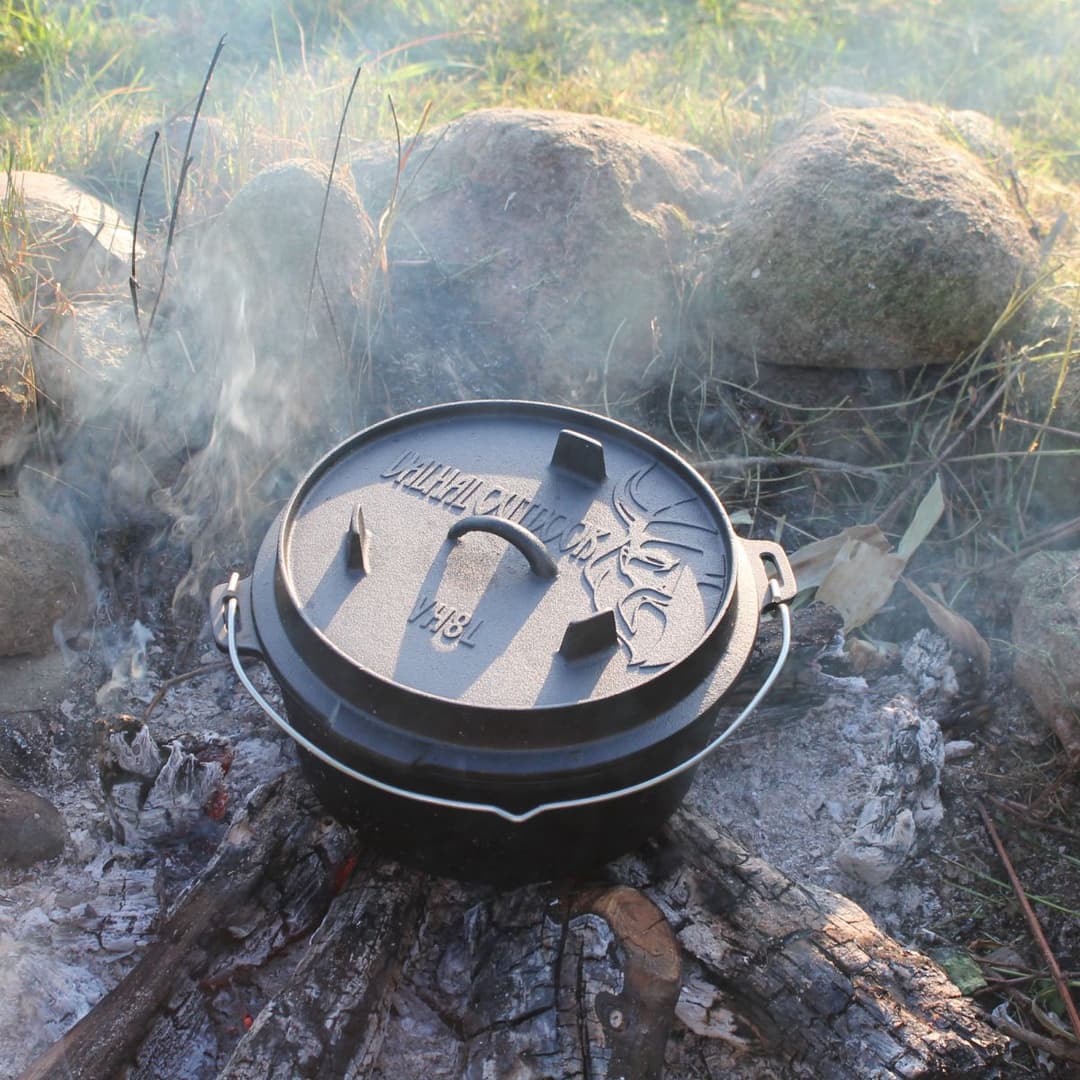
Got a Dutch oven? Treat the pot and the lid separately, and place them apart in the kamado.
Seasoning cast iron in the oven
No kamado to hand? You can also do it in a regular oven. The steps are the same: clean, dry, oil very thinly and wipe off. Set the oven to 200 to 230 °C, put a sheet of aluminium foil on a rack below to catch drips and place the cast iron upside down on the rack above. Let it bake for an hour and then cool down in the oven. Ventilate well, because smoke is released. Here too you repeat it two or three times.
How often to season and how to look after cast iron
After the first round of two to four layers you do not need to start over often. Use the cast iron, look after it well and touch it up where needed.
- If you use it often, for example on the kamado, you build up the layer naturally. Fatty food helps with that.
- Does the iron look matt or grey, or is your food sticking again? Then it is time for an extra round.
- If you are storing it for a longer period, oil it thinly before it goes in the cupboard.
How to look after it after use
- Clean it while it is still warm, with warm water and a brush or scraper. A little mild soap is fine, but stay away from strong cleaning products and the dishwasher.
- Dry it straight away. Never leave it wet or soaking in water.
- Heat it briefly if you like, to dry it completely.
- Rub a very thin layer of oil over it and wipe off the excess.
Fixing rust on cast iron
Rust sounds dramatic, but on cast iron it can usually be fixed.
- Scrub the rust away with steel wool, a wire brush or a scouring pad until you see bare or dark iron again.
- Rinse with warm water and dry it completely, preferably over a small flame or in a warm oven.
- Start seasoning again: oil thinly, an hour at 200 to 230 °C, cool down and repeat.
- Then use it a few times for fatty food to build up the layer.
Is the iron deeply pitted or cracked? Then replacing it is wiser. Have a look at the range under BBQ accessories or ask us via contact.
Common seasoning mistakes
- Too much oil: gives a sticky, lumpy layer. Always wipe off until it looks almost dry.
- Too low a temperature: the oil does not polymerise properly and stays tacky.
- Not starting clean: seasoning over rust or old residue bakes the problems in.
- Leaving the iron wet: the fastest route to rust.
- Acidic or tomato-based dishes straight after seasoning: they attack the fresh layer. Start with fatty meat or vegetables instead.
- Soaking in water or using the dishwasher: strips the layer off.
- Cold water on hot iron: cast iron can crack from thermal shock.
FAQ: seasoning cast iron
Do I always have to season new cast iron?
Which oil is best for seasoning cast iron?
Can I use soap on seasoned cast iron?
Why is my cast iron sticky after seasoning?
Can cast iron go in the dishwasher?
How often do I need to season cast iron again?
Can I season cast iron in the kamado without a heat deflector?