
What's the difference between hot and cold smoking on the kamado?
With hot smoking on the kamado you cook your dish while adding smoky flavour at the same time, usually between 90 and 130 degrees Celsius. With cold smoking the temperature stays below 25 to 30 degrees and you only add smoke, without cooking. Hot smoking is used for pulled pork, ribs and brisket, while cold smoking is suited to cheese, butter and salted salmon.
- Hot smoking: 90-130 degrees Celsius, always indirect with a heat shield
- Cold smoking: below 25-30 degrees, purely for flavour without cooking
- Chunks give long-lasting smoke, chips a quick smoke boost
- Smoking dust is fine wood, especially suited to cold smoking
- Always start mild: apple and beech are the most all-round wood types
Smoking is where barbecue turns into an experience. Not loud, but layered. Subtle. Deep. On a kamado like the Grill Bill you can use smoke in such a controlled way that it enhances your dish instead of overpowering it.
In this article you'll learn everything about smoking on the Grill Bill: the difference between hot and cold smoking, which smoking materials to use (chunks, chips or smoking dust) and which wood types suit which dishes.
What is smoking on a kamado?
Smoking is adding flavour by letting wood smoulder instead of burn. The smoke released soaks into your dish and gives aroma, colour and character.
A kamado is perfect for this: thanks to the ceramic and precise air control you can hold smoke for a long time and dose it very precisely. More control = better flavour.
Hot smoking on the kamado versus cold smoking
There are two main forms of smoking on a kamado: hot smoking and cold smoking. They differ significantly in approach and result.
Hot smoking: smoking and cooking at the same time
With hot smoking the temperature is usually between 90 and 130°C. Your dish is slowly cooked while absorbing smoke. This is the most used smoking technique on a kamado.
- Pulled pork
- Ribs
- Brisket
- Chicken
- Salmon
Hot smoking is always done indirectly, with a heat shield between the coals and your dish. This prevents burning and gives even smoke circulation.
Cold smoking: smoke without heat
With cold smoking the temperature stays below 25-30°C. The goal isn't cooking, but purely adding flavour. This requires more control and a calm setup.
- Cheese
- Salmon (pre-salted)
- Butter
- Nuts
- Salt
Because a kamado insulates well by itself, cold smoking is especially suited to low outdoor temperatures or with a special smoke generator. Patience matters more than fire here.
Smoking materials: chunks, chips or smoking dust?
Not every smoking material does the same thing. The choice determines how quickly smoke is released and how intense it is.
Chunks (smoking wood blocks)
Chunks are large pieces of smoking wood. They smoulder slowly and give off smoke for a long time. Ideal for hot smoking and long sessions.
- Long-lasting, stable smoke
- Perfect for low & slow
- Simply place among the charcoal
Wood chips
Chips are smaller and release smoke faster. Handy for shorter cooks or when you want a quick smoke boost.
- Fast smoke, short effect
- No soaking needed on a kamado
- Suited to fish and chicken
Smoking dust (sawdust)
Smoking dust consists of very fine wood and is mainly used for cold smoking. It smoulders slowly at extremely low temperatures.
- Very subtle smoke
- Perfect for cheese and butter
- Use with a smoke spiral or generator
Wood types and their flavour profile
Not every wood type suits every dish. Think of smoking wood as herbs: more isn't always better.
- Apple: light, sweet, ideal for chicken, pork and fish
- Cherry: mild and fruity, gives meat a nice colour
- Hickory: strong and smoky, classic for ribs and pulled pork
- Oak: full and powerful, suited to beef and game
- Beech: neutral and versatile, good for fish and cheese
- Mesquite: extremely strong, use sparingly with red meat
Always start mild. You can add smoke, but you can't take it away.
Common mistakes when smoking
- Using too much smoking wood
- Letting smoking wood burn instead of smoulder
- Opening the lid too often
- Not using a heat shield for hot smoking
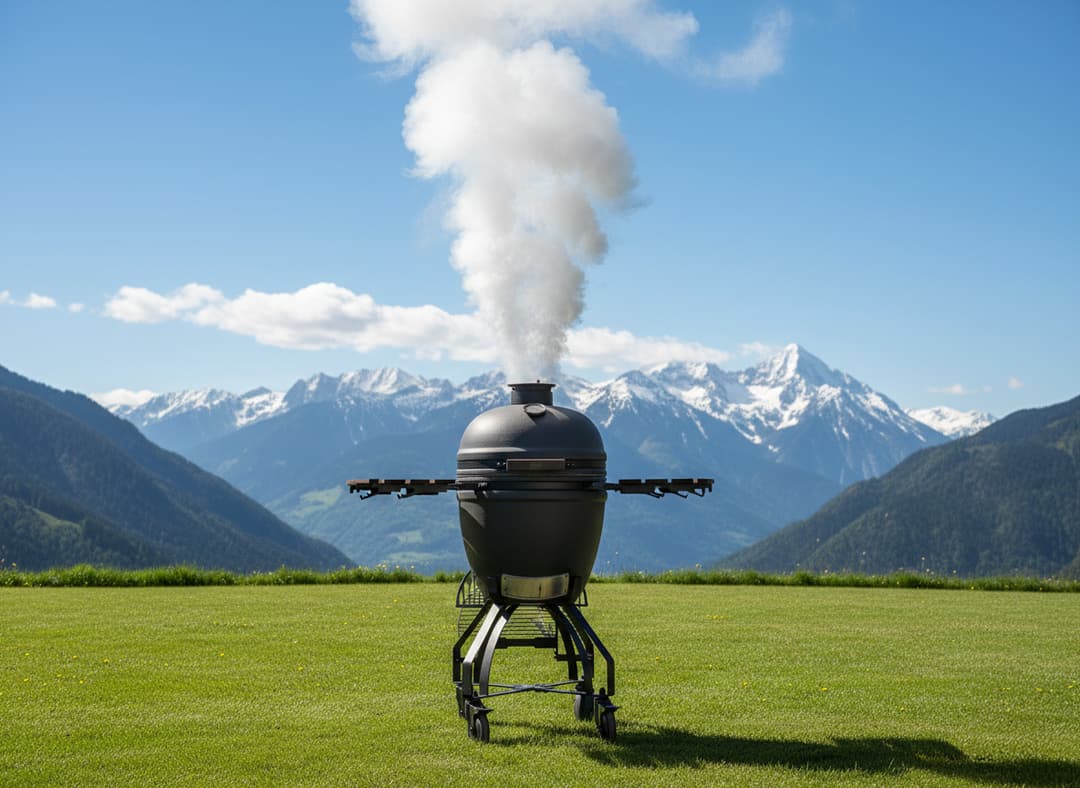
Good smoke is thin and blue/grey. Thick white smoke = bitter flavour.
Ready for the next step? Also discover baking, roasting or afterglow & residual heat and get everything out of your Grill Bill.