
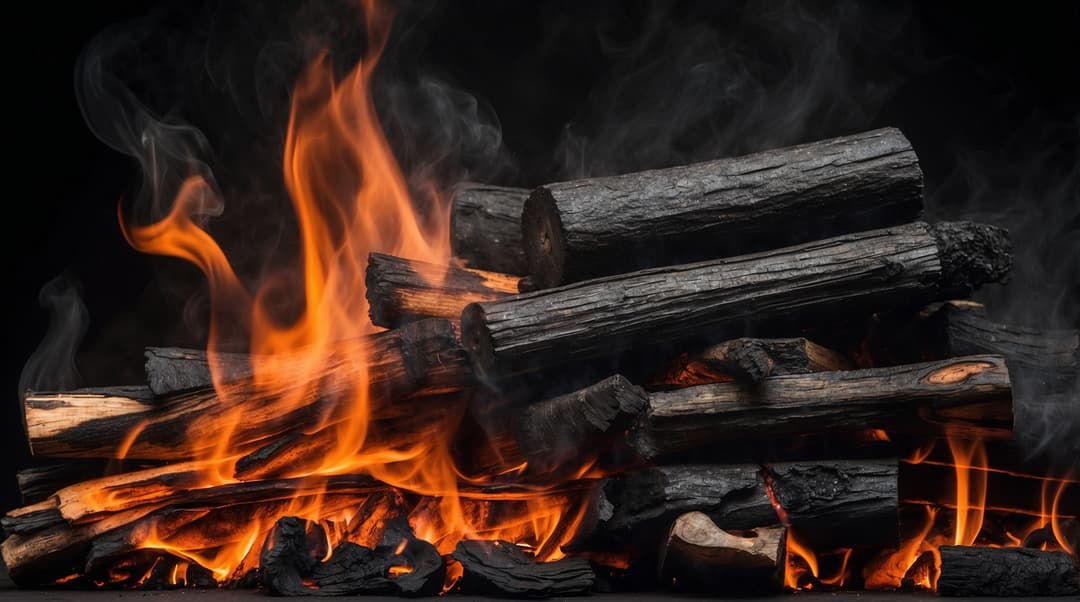
Why is binchotan charcoal so good for your shichirin grill?
Binchotan charcoal is a traditional Japanese product with no chemical additives, giving a pure, authentic flavour, excellent heat retention and minimal smoke development. There are two varieties: eucalyptus (softer, reaches temperature faster) and maitiew (harder, longer burn time).
- No chemical additives or unpleasant smells
- Eucalyptus: softer, burns faster, ideal to get going quickly
- Maitiew: harder, longer burn time for long grilling sessions
- Known for excellent heat retention and minimal smoke
- Can be extinguished in water to reuse
Looking for the ultimate fuel for the Japanese Shichirin or Hibachi Table BBQ? Then we have good news: our binchotan charcoal, available in two varieties, eucalyptus and maitiew, is exactly what you need. Maitiew in particular, known as the harder variant, offers a longer burn time and more stable heat. Perfect for those long, cosy evenings around the grill.
Why binchotan charcoal?
Our binchotan charcoal isn't just any charcoal. It's a traditional Japanese product known for its purity and the way it can enhance the flavour of your food. No chemical additives or unpleasant smells; just the pure, authentic grilling flavour your food deserves.
The perfect match: shichirin grills
To complete your grilling experience, we also offer beautiful, handmade Japanese shichirin grills. These compact, efficient grills are available in round and rectangular shapes and are specially designed to get the best out of our binchotan charcoal. Whether you're hosting an intimate dinner for two or a feast for friends and family, our shichirin grills provide an unforgettable experience.
Eucalyptus versus Maitiew
- Eucalyptus binchotan charcoal: this is the soft variant of binchotan, burns relatively easily, and therefore lasts a bit less long than the Maitiew variant. So if you want to get going a bit faster, this variant is your choice!
- Maitiew binchotan charcoal: this harder variant keeps burning nicely for a long time, but you'll also spend 10 to 15 minutes longer heating up this type of wood. Choose this variant if you want to enjoy your Japanese creations on the Shichirin grill for a few good hours.
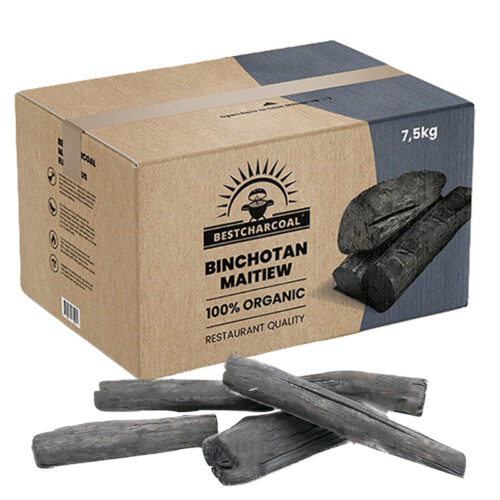
Binchotan Charcoal – 7.5kg – Maitiew – Bestcharcoal
€59.95
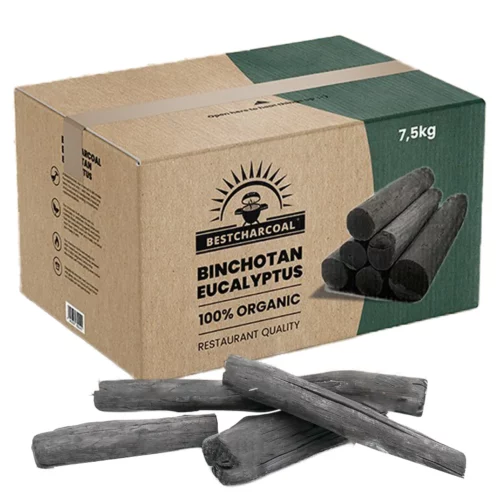
Binchotan Charcoal – 7.5kg – Eucalyptus – Bestcharcoal
€59.95
Tips for a successful barbecue
- Make sure the charcoal is properly hot before you start grilling.
- Light it with a softer wood type, for example acacia.
- Take into account the cooking time of your dishes; choose the right charcoal for the right use.
- Enjoy the pure flavours our binchotan charcoal gives your dishes.
Why is Binchotan so expensive?
That's partly due to the production process, which takes much longer than for regular charcoal. Binchotan charcoal, also known as white charcoal, is a high-quality charcoal variant mainly produced in Japan and valued for its purity and long burn time. The production process of binchotan charcoal is a traditional craft that requires careful skill.
- Wood selection: The process starts with selecting high-quality wood, usually oak, cherry or oak species, which is then split into pieces of equal size.
- Carbonisation: The selected blocks of wood are then placed in a sealed kiln and heated at a very high temperature, often above 1000 degrees Celsius. During this process, volatile substances and impurities are eliminated, giving the charcoal a pure form.
- Sealing airtight: A crucial step in the process is sealing the kiln to limit the oxygen supply. This causes the wood to char slowly without fully burning, resulting in binchotan's characteristic white colour and high density.
- Cooling: After the carbonisation period, the kiln is gradually cooled before it's opened. This slow cooling process prevents the charcoal from cooling too quickly and cracking, which could affect the quality.
- Sorting and selecting: Once the kiln has cooled, the resulting pieces of charcoal are carefully sorted by size and quality. The best pieces are selected for sale, while smaller fragments may be used for other purposes such as water purification or soil improvement.
The whole process of producing binchotan charcoal is labour-intensive and requires skill and experience to achieve the best quality. The resulting charcoal is known for its excellent heat retention, minimal smoke development and long burn time, making it a favourite choice for grilling, cooking and even water filtration.
Choose the perfect grilling experience
When considering the perfect grilling experience, it's essential to choose quality and authenticity. Our binchotan charcoal and shichirin grills aren't just a choice for quality, but also a step towards an authentic Japanese grilling culture. Try it yourself and experience the difference. Have questions or want advice? We're always ready to help you with our expertise. Grilling becomes not just a meal, it becomes an experience.
Frequently asked questions about binchotan charcoal
What's the difference between eucalyptus and maitiew binchotan?
Why is binchotan charcoal more expensive than regular charcoal?
Can I reuse binchotan charcoal?
Throwing away binchotan?
Ok, you're done grilling on your table bbq, and the binchotan charcoal is still burning nicely. Don't wait for the fire to go out and the charcoal to burn up completely. No, you can extinguish binchotan by dousing the charcoal in a bucket or tub of water. This lets you reuse it for a next session, handy right?