
How do you bake vegetables in embers on the kamado BBQ?
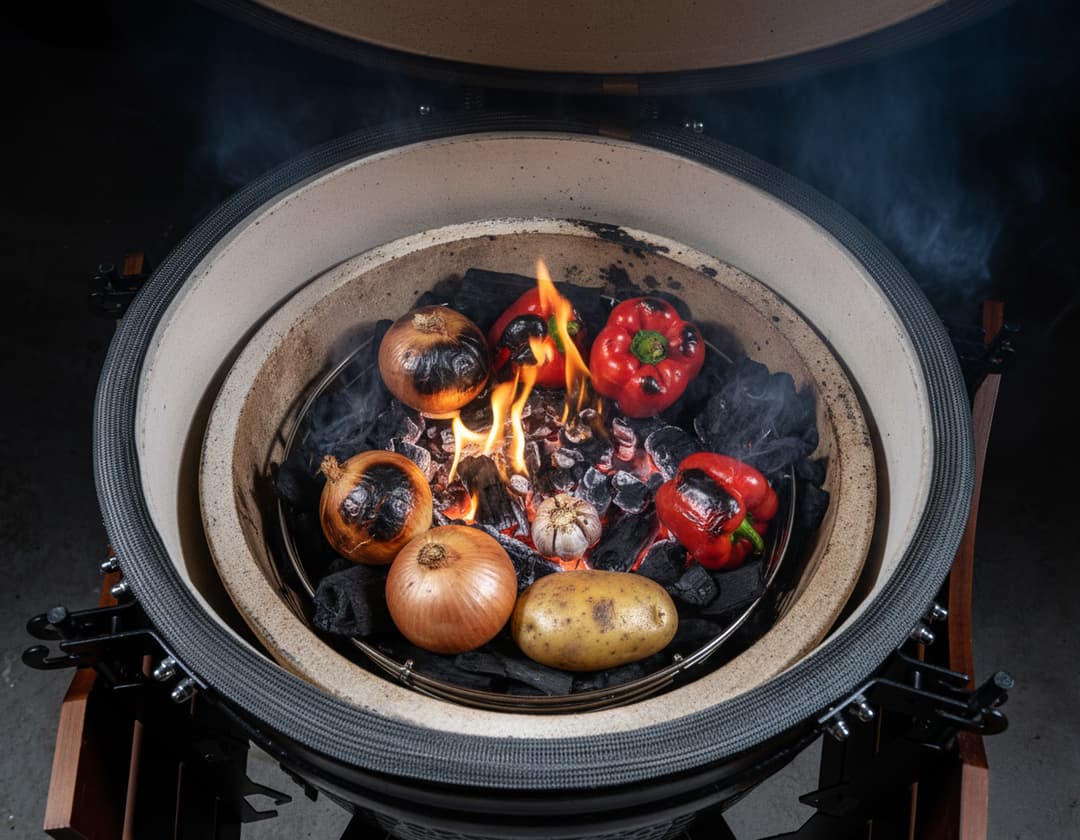
Baking in embers on the kamado BBQ is slowly cooking ingredients in their own skin or in foil, without direct heat, usually between 150 and 200 degrees Celsius. The moisture stays locked in, concentrating the flavour and making potatoes, root vegetables or corn cobs soft on the inside. You can bake with or without foil, depending on whether you want pure flavour or speed.
- Working temperature usually between 150 and 200 degrees Celsius
- Always indirect, with or without aluminium foil
- Ideal for potatoes, root vegetables, corn cobs and onions
- Without foil you get more flavour, with foil it's faster
- Combines perfectly with afterglow for extra efficiency
Baking in embers might just be the most underrated kamado technique. No marinades, no sauces, no fuss. Just time, heat and patience. By slowly cooking ingredients in their own skin or peel, the flavour concentrates and you get an intense, pure result.
On the Grill Bill this technique works perfectly thanks to the ceramic and stable heat. In this article you'll read exactly what it is, how to approach it and which ingredients really benefit from it.
What is baking in embers on a kamado?
This is slowly cooking ingredients in their own skin, peel or foil, without direct heat. The moisture stays locked in, so the product becomes soft on the inside and the flavour becomes maximally concentrated.
You can think of it as a combination of baking and steaming, but without extra water. The Grill Bill acts as a calm, even oven here.
When do you choose baking in embers on the kamado BBQ?
This is ideal if you want to cook ingredients without drying them out or browning them. Think of:
- Potatoes and sweet potatoes
- Root vegetables such as beetroot, celeriac and parsnip
- Corn cobs
- Onions and garlic
- Pumpkin
It's also perfect as a side dish during a longer BBQ session, or as a use of afterglow / residual heat.
The right setup for baking in embers
You always do this indirectly. The setup is simple:
- Grill Bill kamado with charcoal
- Ceramic heat shield / heat deflectors
- Grate or multilevel system
- Aluminium foil (optional)
You can place ingredients directly on the grate, in a bowl or loosely wrapped in foil. Foil speeds things up a bit, without foil you often get more pronounced flavour.
Temperatures for baking in embers
This isn't about speed. The ideal temperature is usually between 150 and 200°C.
- Potatoes: 180-200°C
- Sweet potato: 170-190°C
- Root vegetables: 160-180°C
- Afterglow baking in embers: 120-160°C
Allow 45 minutes to over an hour, depending on size and temperature.
Baking in embers with or without foil?
Both work, but the result differs:
- Without foil: more intense, pure flavour and a slightly drier skin
- With foil: cooks faster, extra juicy and more forgiving
Tip: start without foil and wrap the last part in foil if needed to speed up cooking.
Combining baking in embers with other techniques
This rarely stands alone. It's a perfect addition to other kamado techniques:
- After roasting as a side dish
- During stewing for a complete meal
- With afterglow for maximum efficiency
Serve the baked vegetables simply: cut open, a bit of butter or oil, salt and done.
Common mistakes when baking in embers
- Too high a temperature (then the outside burns)
- Not taking enough time
- Baking directly above the coals
- Cutting ingredients too small
This is about trust. Give it time.
This technique fits nicely with cooking outdoors smartly and consciously. Also discover steaming and afterglow & residual heat to really get everything out of your Grill Bill.