
What is the difference between a BBQ and a kamado?
- A kamado holds heat thanks to its thick ceramic
- The temperature range runs from low and slow to very hot
- A kamado generally uses less charcoal per session
- A kettle or gas barbecue is lighter and reaches temperature faster
- A kamado generally costs more to buy than a regular BBQ
The difference between a BBQ and a kamado is not just about shape. A kamado feels different, cooks differently and asks for a different way of handling fire than the kettle barbecue in the neighbours' garden. Whether you are torn between charcoal, gas, a plancha or a kamado, you want to know what you get in return.
We put the four popular options side by side on heat retention, temperature range, consumption, cooking techniques, heat-up time, weight and maintenance. Would you rather have personal advice straight away? Then take a look at our page which BBQ should I buy.
What makes a kamado different from a regular BBQ?
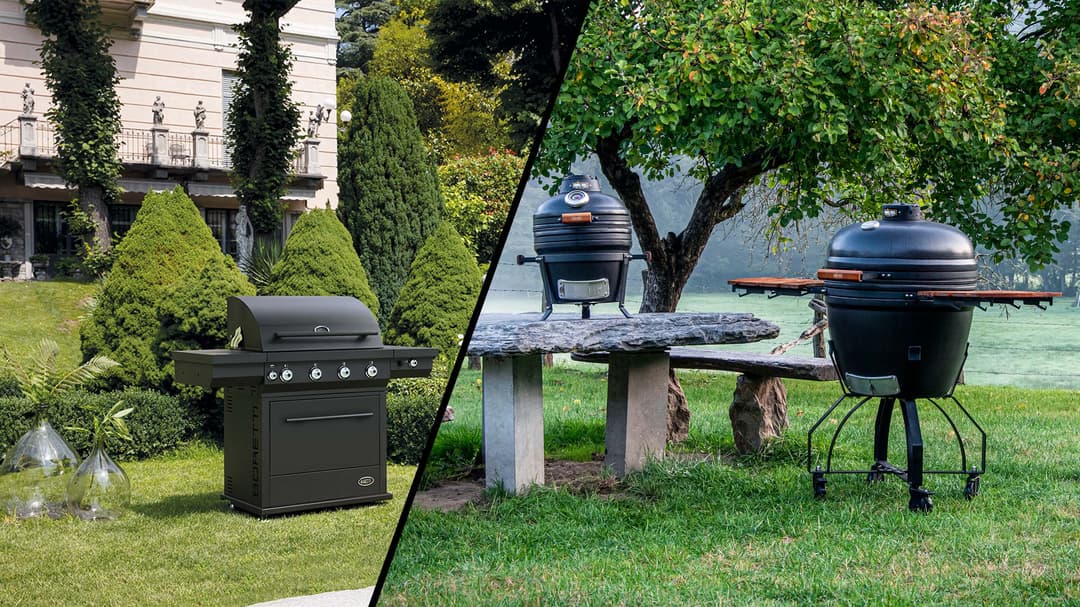
A regular kettle barbecue is a metal bowl with a grate and a lid. A gas barbecue works with burners and a gas bottle. A plancha has a thick cooking plate above a fire or burner. A kamado is a thick-walled, ceramic, egg-shaped barbecue with a tight-fitting lid and air vents at the top and bottom.
That construction is the whole difference. The ceramic insulates, keeps the heat inside and lets you steer the temperature precisely with air alone. As a result a kamado behaves more like an oven than like an open fire. You can find more about the kamado as a whole on our page kamado BBQ.
Heat retention and temperature range
A thin-walled kettle or gas barbecue loses heat quickly, especially in wind or on a cold evening. You have to adjust more often and add more fuel to stay at temperature. Thanks to its ceramic, a kamado holds the temperature even when you open the lid briefly.
- Kamado: from low and slow (around 110 °C) to very hot for pizza and steaks (300 °C and more).
- Kettle barbecue: fine for grilling, but low, stable temperatures are hard to maintain.
- Gas barbecue: easy to control, but generally less suited to a long, stable smoking session.
- Plancha: strong on high heat with zones, the temperature varies with the distance to the fire.
The strength of the kamado is that it handles both extremes and stays stable for hours.
Consumption: charcoal, gas and wood
Because a kamado insulates so well and lets in little air, the charcoal burns slowly. With a good load you can often cook for hours without topping up, and after shutting down part of the charcoal is left for next time. A kettle barbecue generally uses more charcoal for the same cooking time, because the heat escapes more easily.
With gas you pay for the gas bottle and consumption depends on how high you set the burners. A wood-fired plancha uses wood, and the amount depends on your cooking session and the weather. Which charcoal you use also makes a difference. Take a look at our range of BBQ charcoal if you want to know more.
Cooking techniques: what can you do on which?
On a kettle barbecue you mostly grill directly, sometimes with a bit of indirect heat. On gas you do the same, with more convenience. On a plancha you cook on a hot plate: think prawns, vegetables, smash burgers and eggs. A kamado combines the best of everything.
- Direct grilling of steaks and burgers
- Indirect cooking of a whole chicken or ribs
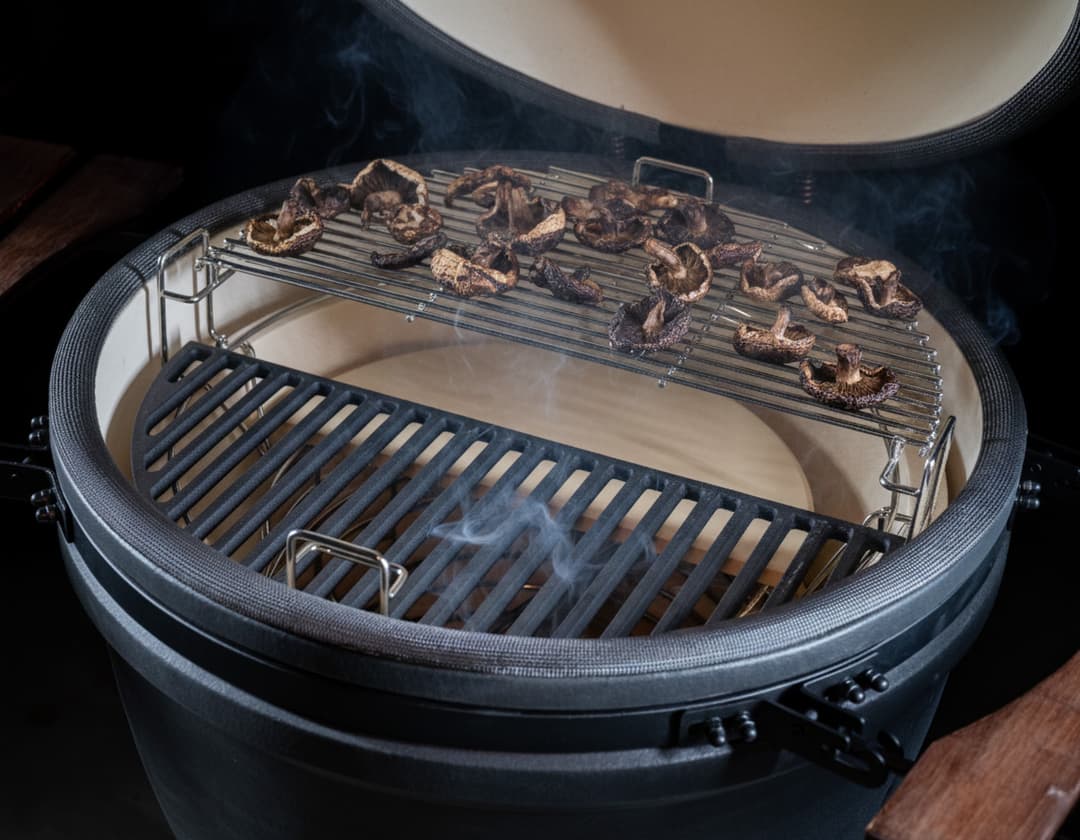
- Smoking, both hot and cold
- Baking pizza and bread
- Braising, steaming, wok cooking and roasting in the embers
If you like variety, you get the most out of a kamado. If you mainly want to cook quickly on a hot plate, a plancha is the place to be.
Heat-up time, weight and maintenance
Heat-up time. Gas is the fastest: light it and you can cook after a few minutes. A kettle barbecue needs time for the coals. A kamado asks for a little more patience, because the ceramic heats up slowly and has to stabilise. A wood-fired plancha needs time to build a bed of embers and heat the plate.
Weight. Ceramic is heavy. You do not simply move a kamado with one hand, which is why they usually stand in a table or on a trolley with wheels. A kettle or gas barbecue is much lighter.
Maintenance. A kettle barbecue needs its grates and ash cleaned regularly. A gas barbecue has burners and a grease tray that you have to keep clean. With a kamado you clean the ash and the grate, and the ceramic itself needs little. A plancha mainly needs attention for the cooking plate, which you clean and oil after use.
The difference between a BBQ and a kamado in one table
Below you can see the four options side by side. The values are general and can differ per model.
Kettle barbecue, gas barbecue, plancha and kamado compared
| Feature | Kettle barbecue | Gas barbecue | Plancha | Kamado |
|---|---|---|---|---|
| Heat retention | Moderate | Moderate | Good on the plate | Very good |
| Temperature range | Medium to high | Low to high | High, with zones | Low to very high |
| Consumption | Fairly a lot of charcoal | Gas, depends on the setting | Wood, depends on the session | Little charcoal |
| Cooking techniques | Grilling | Grilling | Cooking on a plate | Grilling, smoking, baking, braising and more |
| Heat-up time | Medium | Short | Medium | Medium to long |
| Weight | Light | Light to medium | Heavy to medium | Heavy |
| Maintenance | Grate and ash | Burners and grease tray | Cleaning and oiling the plate | Ash and grate |
| Purchase | Generally affordable | Generally affordable to medium | Generally medium to high | Generally more expensive |
Which one suits you?
Do you only occasionally cook a quick burger and want no fuss? Then a gas or kettle barbecue is fine. Do you want to cook all-round, with time for technique and a love of smoke and baking? Then a kamado is worth it. Do you like cooking on a hot plate with a sociable fire? Then a plancha fits.
A kamado generally costs more to buy, but you get a versatile appliance in return. Want to know how the kamado compares with a gas barbecue? Then read our comparison Grill Bill kamado versus gas. Browse the kamados on kamado BBQ and the planchas on planchas.
FAQ: BBQ or kamado
Is a kamado better than a regular BBQ?
Can I also just grill on a kamado?
Does a kamado use less charcoal?
What is the difference between a plancha and a kamado?
Is a kamado difficult to use?
Why is a kamado so heavy?