
What is a heat deflector and when do you use it?
- Ceramic plate between the fire and the grate, also called a plate setter
- Turns your kamado into a hot air oven
- Use it for low and slow, roasting, baking and braising
- Leave it out for steaks, burgers and anything that needs direct grilling
- Always let it warm up with the kamado to avoid thermal shock and breakage
Anyone holding a heat deflector for a kamado for the first time usually wonders: does this thing always have to go in? The short answer is no. It is a tool, not a standard part. In this article you will read what the deflector does, when it helps, where it should sit and how to stop it cracking. Want the wider technique behind it? Then read indirect cooking on the kamado BBQ. This article is about the part itself.
How a heat deflector works in a kamado
A kamado is made of ceramic, and ceramic holds heat very well. Without a deflector, the heat from the glowing charcoal radiates straight up to your grate. That is exactly what you want for a steak, but not for a whole chicken that needs two hours.
The heat deflector, often called a plate setter, is a ceramic plate that you place above the fire bowl. The plate absorbs the infrared radiation from the coals and then passes the heat gently on to the air in the dome. That warm air circulates around your food, just like in an oven. This is called convection. The result: even cooking, less chance of a scorched underside and a steadier temperature.
Think of the deflector as a shield. The fire keeps burning, but your food is no longer sitting right on top of it.
Direct or indirect: when do you use it and when not?
The rule of thumb is simple: the longer something stays on the kamado, the more likely you want a deflector.
Use it for
- Low and slow: pulled pork, brisket, spare ribs and other cuts that need hours.
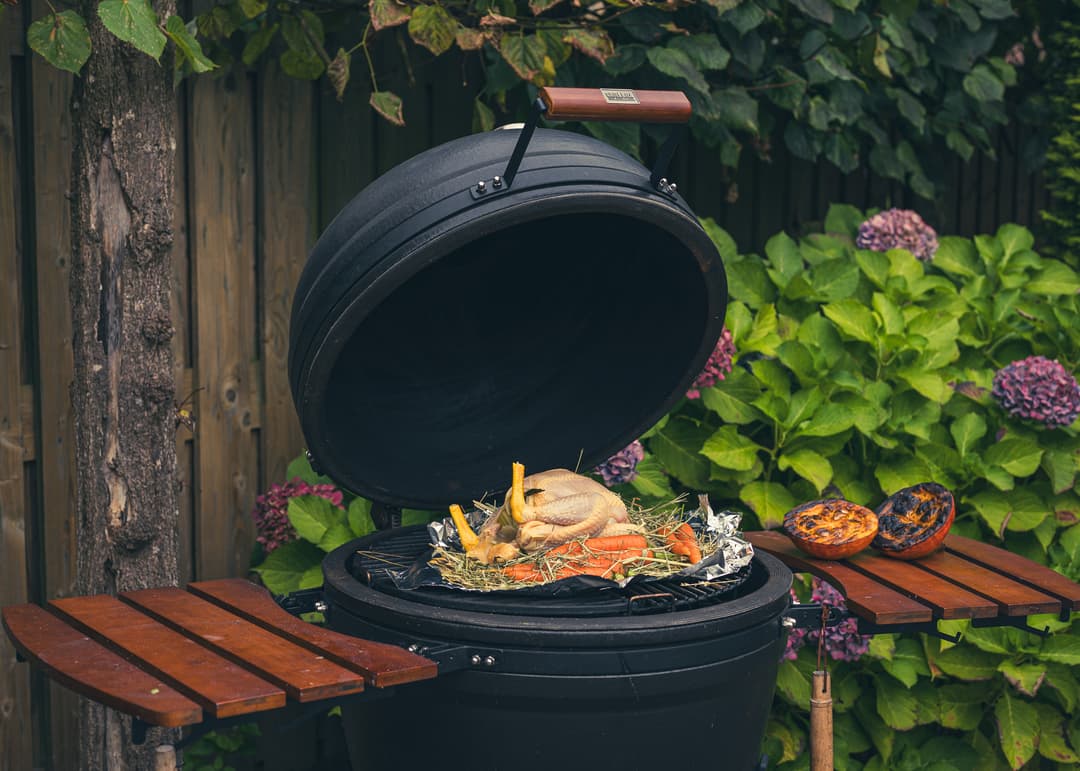
- A whole chicken, turkey or large roast, so the outside does not burn before the middle is cooked.
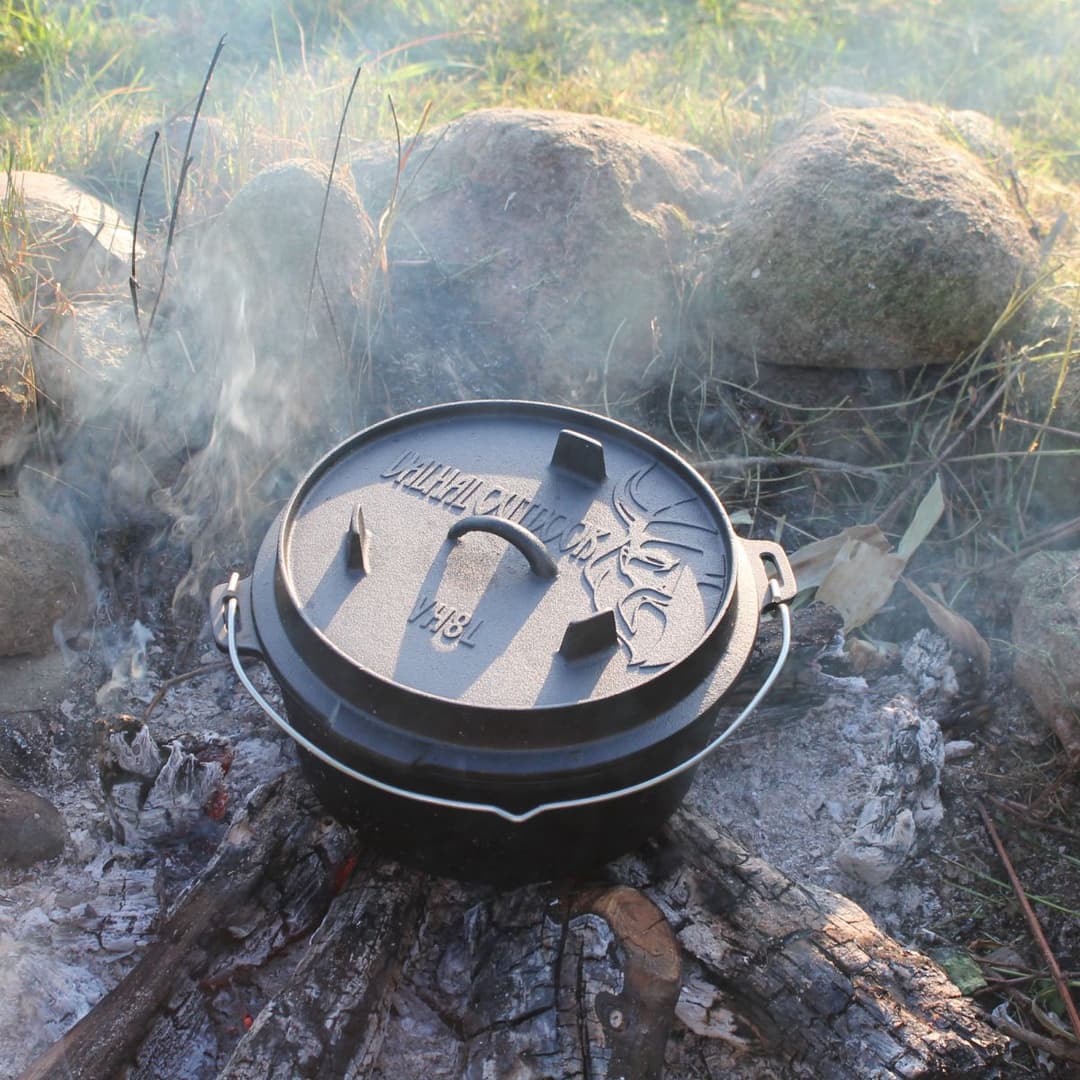
- Casseroles, stews and dishes in a Dutch oven.
- Baking: bread, pizza and tarts, usually with a pizza stone.
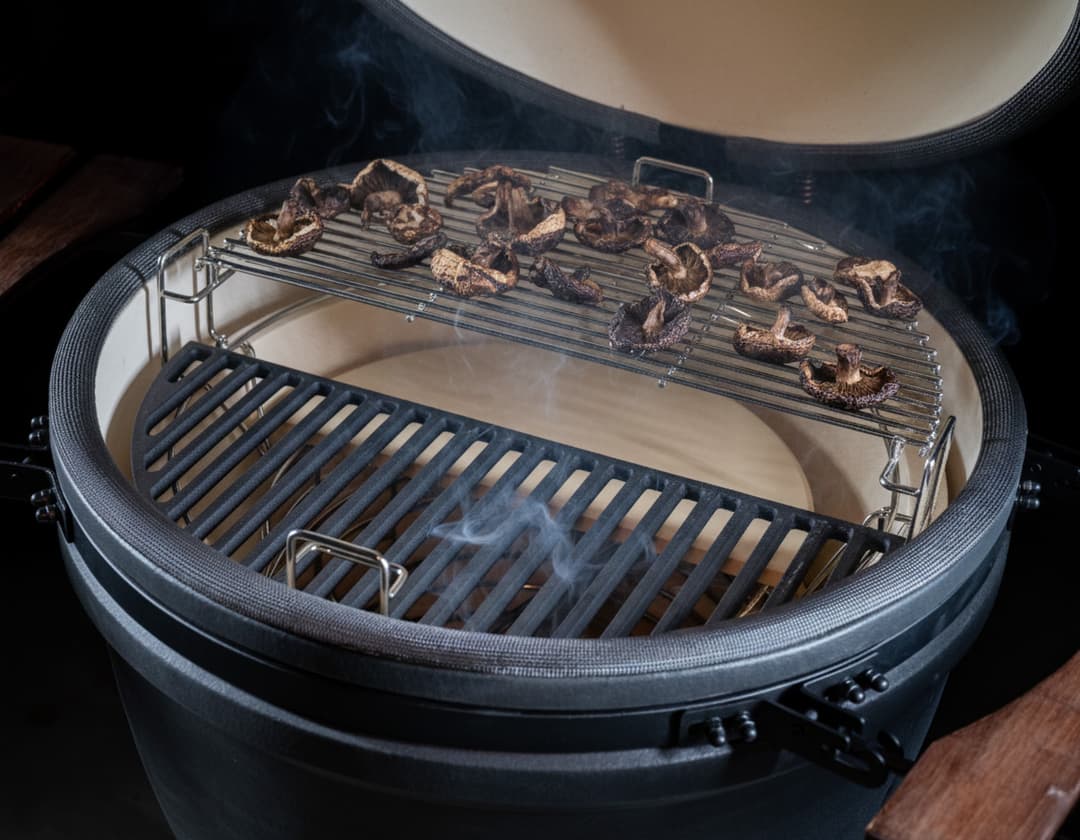
- Smoking: the smoke stays mild and your food dries out less quickly.
Leave it out for
- Steaks, burgers, sausages and vegetables that you want to sear quickly over high heat.
- Anything where you actually want the direct heat and the grill marks.
- Wok cooking and other techniques that need maximum heat.
You can also combine the two. Many people cook indirectly first and then remove the deflector for a short, hot finish. You can read about that reverse sear in the article on indirect cooking.
How to place the heat deflector, step by step
Every kamado is slightly different, but the order is the same for most models.
- Fill the fire bowl with charcoal. Using smoking wood? Put it between the coals now, because you will not be able to reach it later.
- Light the charcoal and let the firelighters burn out. Once the coals are glowing well, after about 10 to 20 minutes, it is time.
- Place the heat deflector in its intended position, on most kamados on the rim of the fire bowl or on supports inside the kamado. Use heat-resistant gloves and tongs.
- Put the grate above it and let the deflector warm up gently while you stabilise the temperature.
- Put your food on, close the lid and set the airflow to your target temperature.
Does your setup differ slightly? Have a look at the kamado accessories to see what exists for your kamado, or just ask us.
Half deflectors and zones: playing with heat
A full deflector is not always what you want. With half deflectors, or by leaving one half out, you create two zones: a hot side and a cool side.
- Hot zone: no deflector above it. Here you sear briefly.
- Cool zone: deflector above it. Here your meat cooks through gently or stays warm.
This is handy for a session with several dishes, or when you want to cook a piece of meat slowly first and finish it in the hot zone. Put small pieces and thin vegetables in the hot zone and large pieces in the cool zone. Be aware that zones in a kamado are less sharply separated than on a plancha. Ceramic and air spread the heat, so keep an eye on your thermometer.
Drip pan and grate: what goes where?
With fatty cuts, fat and moisture drip downwards. On the deflector that burns on, creates smoke and can start to smell. A drip pan or a simple aluminium tray on the deflector catches it.
- Put the drip pan on the deflector, under the grate, for fatty cuts such as a whole chicken or a pork shoulder.
- Add a little water or stock if you like. That keeps the air a bit moister and stops the fat from burning.
- Use the liquid later for gravy or sauce, unless the fat has burnt.
With indirect cooking, it is better to measure at grate height and with a probe in your meat. See our BBQ thermometers for a suitable one.
Care and cleaning of your deflector
The deflector is sturdy, but not indestructible.
- Let it cool down completely before you touch or clean it.
- Brush off loose residue with a dry brush or spatula. Do not use soap, because ceramic absorbs moisture and smells.
- Has fat burnt on? Simply let it burn off during your next session. It turns into white ash.
- Store it dry. A wet deflector that you put straight into a hot kamado is a risk.
- Check for cracks now and then. Hairline cracks are not unusual in ceramic, but a deflector that breaks into pieces should be replaced.
Preventing breakage from thermal shock
The main cause of a cracked deflector is a sudden change in temperature. Ceramic expands unevenly when one part heats up quickly and another stays cold.
- Never put it cold into a roaring hot kamado. Always let it warm up with the kamado, preferably from a low temperature.
- Do not pour cold water or ice-cold liquid over it when the deflector is hot.
- Do not put it on a cold, wet surface after use. Let it cool down in the kamado.
- Do not drop it and do not knock it against the grate.
- At high temperatures, always open the lid slowly (burping), so the temperature does not change abruptly.
Has your deflector cracked anyway, or are you not sure whether it is still safe? Feel free to contact us.
FAQ: heat deflector in the kamado
Do I always have to use a heat deflector?
Is a heat deflector the same as a plate setter?
Can I put the deflector in during cooking?
Do I need a drip pan?
What is the advantage of a half deflector?
How do I stop my heat deflector from breaking?
Can I put aluminium foil on the deflector?